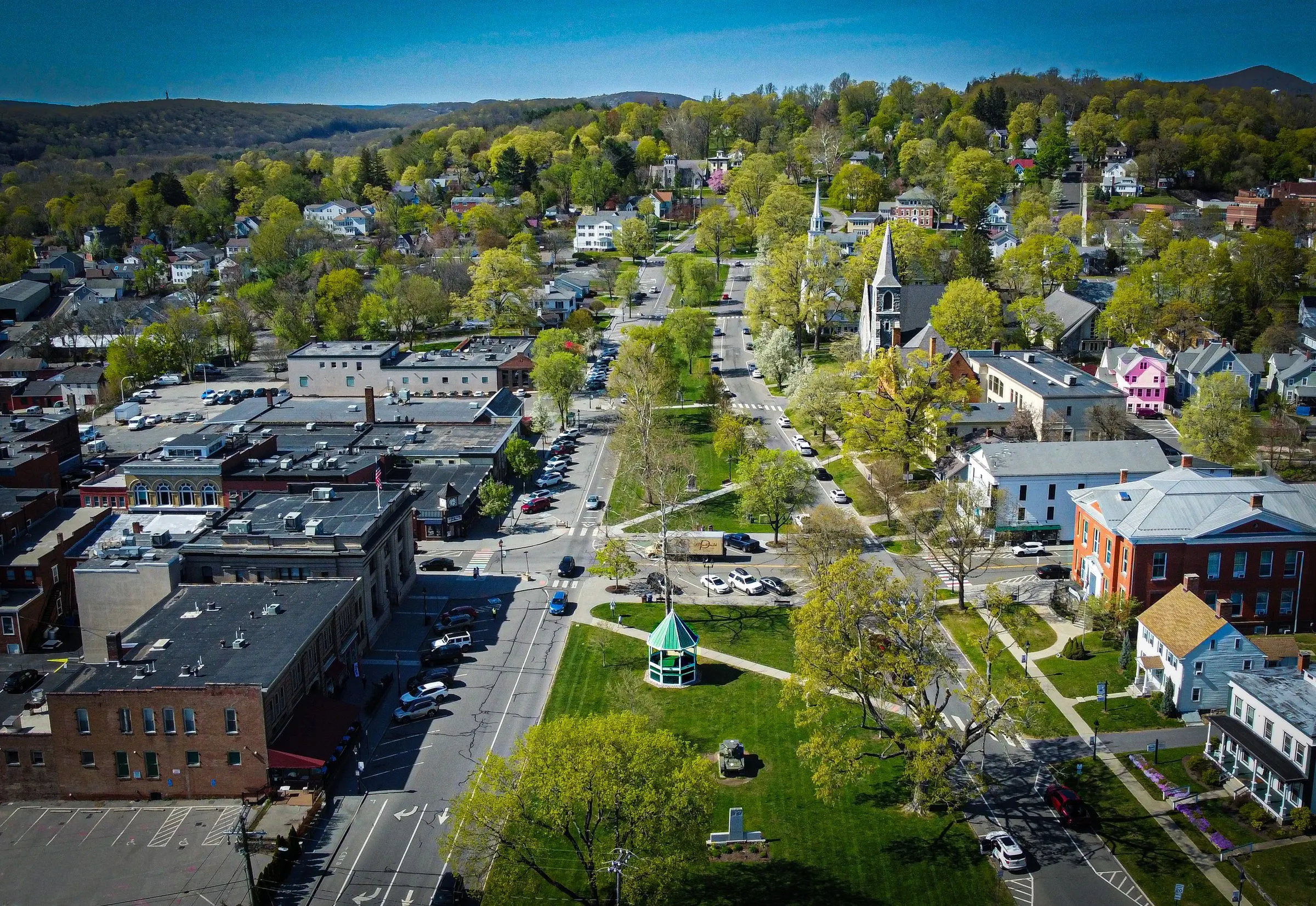
The things that decide what a house here is likely to need: geology, water, flood exposure, housing eras, and environmental history.
Marble bedrock and hard water
Bands of marble and limestone run through the Housatonic valley. Water drawn from them is hard, which scales water heaters, shortens the life of dishwashers and fixtures, and is why softeners are so common in this part of the state. It is a maintenance cost rather than a safety issue, but it is a real one over a decade of ownership.
The Housatonic River
River frontage carries flood-zone considerations, and low-lying property along the Housatonic and its tributaries should have its FEMA mapping established before an offer. Basement moisture history is worth asking about directly on anything near the water.
Candlewood Lake shore housing
Candlewood was created in 1928 and its shoreline filled with seasonal cottages, a great many of which are now year-round homes. Expect piers, shallow block walls and crawlspaces, minimal original insulation, undersized electrical service, heating added after the fact, and septic systems sited close to the water on steep ground.
Wells and septic as the default
Outside the center, private water and private waste treatment are the norm. On rocky, sloped lots, replacement options for a failed leach field can be severely limited, which makes the condition of the existing system a material purchase question rather than a footnote.
Long private driveways and access
On a rural New Milford property the driveway is part of the house. Its surface, its drainage, its culverts, and whether emergency vehicles can use it in February are all worth understanding, and they belong in the report.
Radon: EPA Zone 2
Litchfield County is EPA Zone 2, moderate predicted potential, a county average between 2 and 4 pCi/L. Bedrock varies considerably across a town this large, which is exactly why a house-level test is the only meaningful answer.