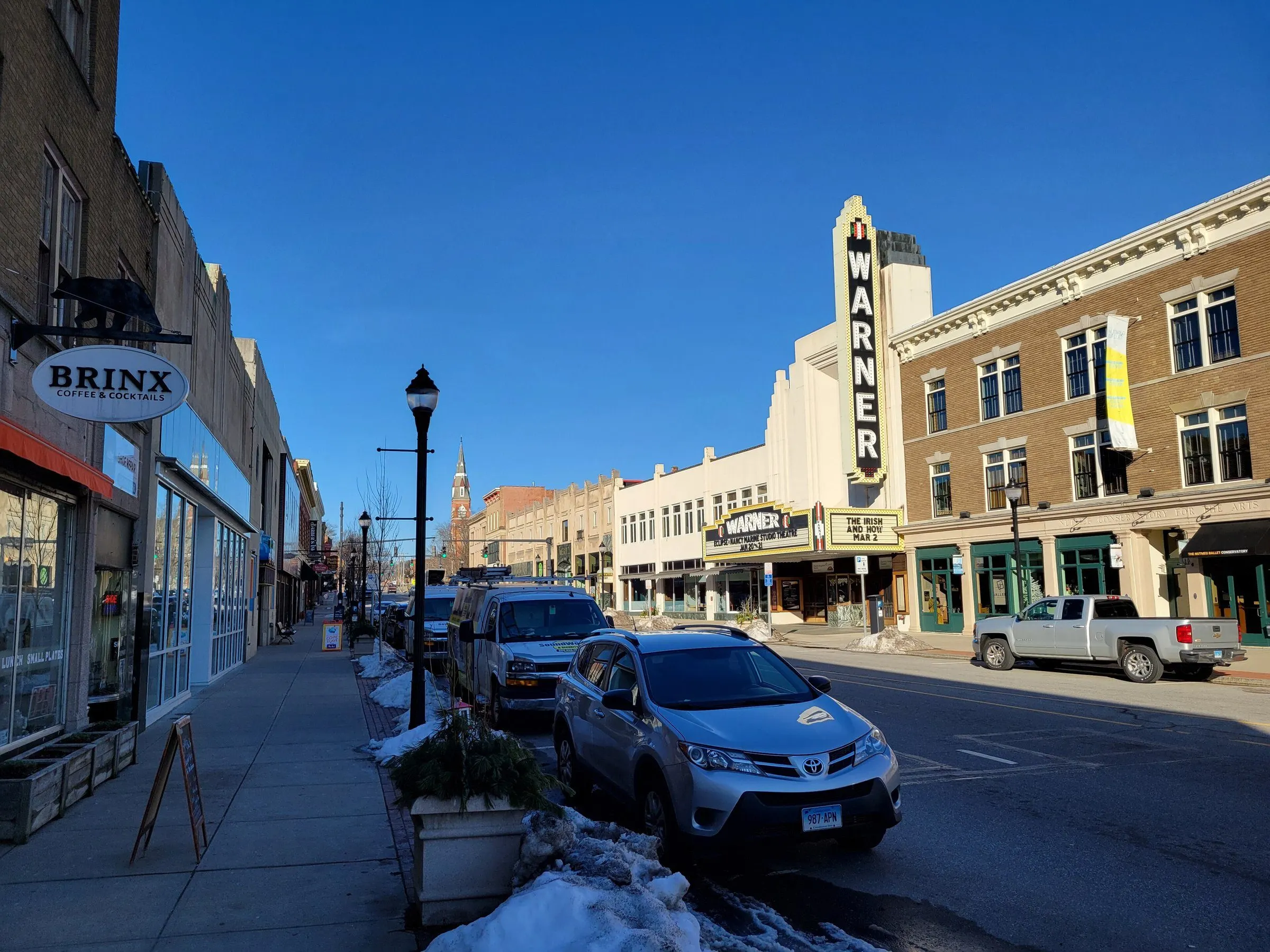
The things that decide what a house here is likely to need: geology, water, flood exposure, housing eras, and environmental history.
The Naugatuck River and the flood of 1955
The August 1955 flood, driven by hurricanes Connie and Diane arriving days apart, devastated the Naugatuck Valley and Torrington was among the hardest-hit places in the state. The flood control works that followed reshaped the river through the city. Low-lying property still carries flood-zone significance, and current FEMA mapping is the authority for any specific address.
Hillside Victorians
Slate and layered roofs, complex rooflines, porches and elaborate exterior trim, multiple chimneys, fieldstone foundations, and heating plants originally sized for coal. Many have been divided into apartments and some have been converted back. The maintenance demands are real and the architecture is genuinely fine.
Steep lots and retaining walls
The city is built on hills. Retaining walls of every vintage and material hold the terraces up, and their condition is a structural finding rather than a cosmetic one. Where surface water goes after it leaves a terrace matters to the house below.
Wood heat and older heating systems
Wood stoves, fireplace inserts, and older oil systems are common here, and more so outside the center. Clearances, flue liners, hearth construction, and combustion-air supply all get inspected, and any solid-fuel appliance deserves a careful look.
Wells and septic outside the center
Beyond the served core, houses draw from private wells and treat their own waste. Yield, water quality, tank condition, and leach-field performance are core purchase questions, and expanded testing is worthwhile on a bedrock well.
Radon: EPA Zone 2
Litchfield County is EPA Zone 2, moderate predicted potential, a county average between 2 and 4 pCi/L. Highland bedrock is variable, so a county average is a weak guide to a particular basement. Testing is the reliable answer.