Skip to content
The ironwork arch over Wooster Street in New Haven, framed by autumn trees

Wooster Street, New Haven

New Haven County

New Haven County

Home Inspectors in New Haven, CT

Three-family houses, Victorian neighborhoods, and traprock ridges, all inside one city.

About New Haven

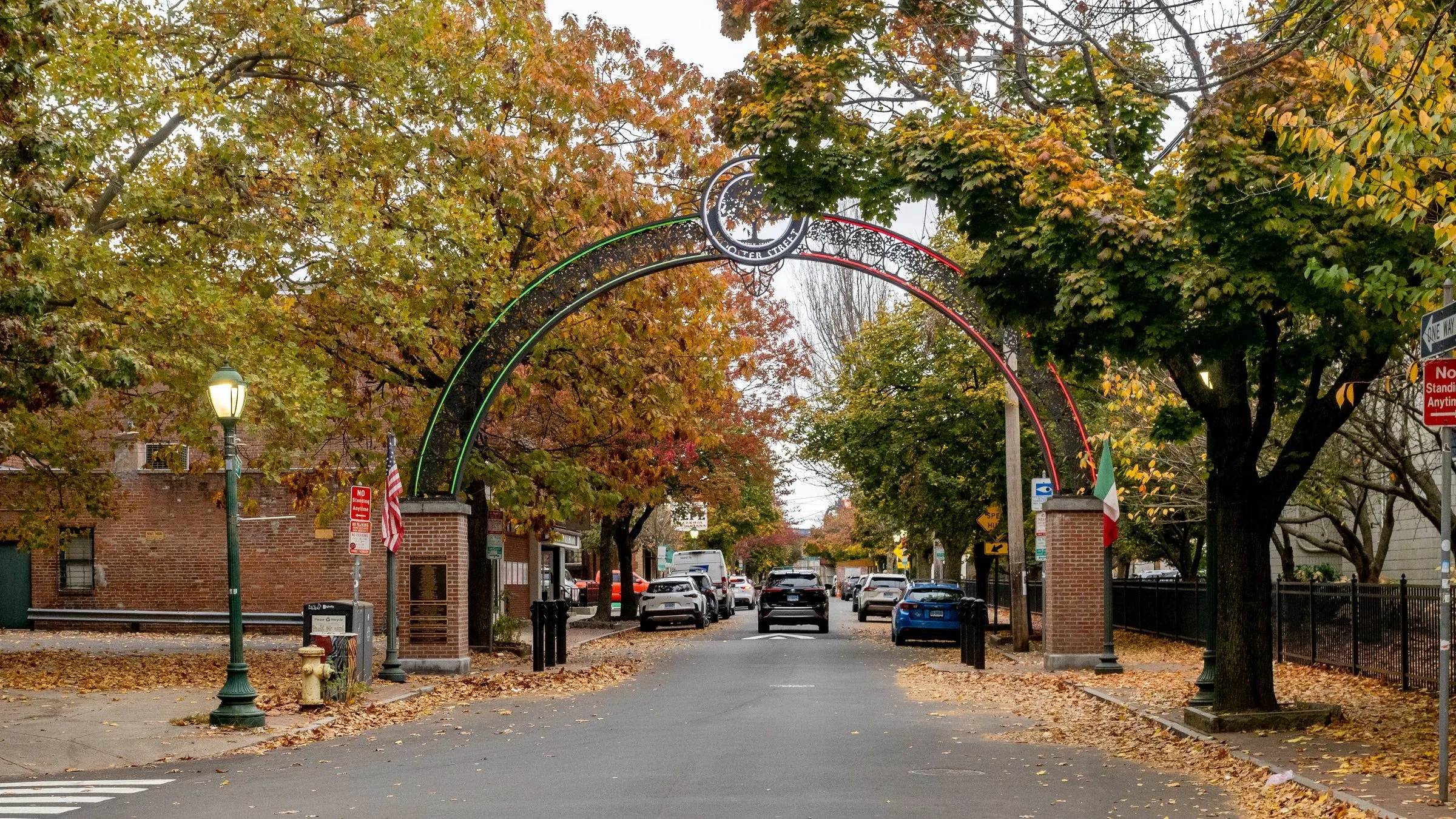
The three-family house is this city’s signature building and its most common sale. New Haven was laid out in 1638 around a nine-square grid that is still the shape of downtown, and it has not stopped building housing since. The result is a city where the inspection changes completely from neighborhood to neighborhood: Italianate and Victorian rowhouses in Wooster Square, grand Queen Annes and Colonial Revivals in East Rock and Prospect Hill, three-family houses by the thousand in Fair Haven and Newhallville, bungalows in Westville, and shoreline cottages at Morris Cove.

The three-family house is the city’s signature building type and its most common transaction. Understanding how those houses were built, converted, and re-converted over a century is most of what a New Haven inspection is.

We inspect throughout New Haven: East Rock, Westville, Wooster Square, Fair Haven, Morris Cove, Prospect Hill, Edgewood, Beaver Hills, The Hill, Quinnipiac Meadows, and everywhere between.

Local Factors That Affect New Haven Homes

The things that decide what a house here is likely to need: geology, water, flood exposure, housing eras, and environmental history.

Traprock ridges and the ground between them

East Rock and West Rock are basalt ridges standing above sedimentary lowlands, and the neighborhoods on their flanks sit on shallow, hard ledge. Ledge redirects groundwater rather than absorbing it, which is why basements at the base of a slope behave differently from basements two streets away.

Three rivers and a harbor

The Mill, Quinnipiac, and West Rivers all reach the harbor through the city, and the low ground along them, Fair Haven, the Quinnipiac Meadows, parts of the Hill, has a flood history. Add tidal influence at the harbor and Morris Cove, and flood zone status becomes a per-address question worth answering early.

Old drain and sewer laterals

Housing this old is connected to the street by laterals that are frequently as old as the house. Clay tile and cast iron lines, tree roots, bellies, and partial collapses are common enough in the older neighborhoods to be worth planning for. A visual inspection reports what it can see; a camera scope is the honest way to answer the question definitively on a hundred-year-old lateral.

The three-family building type

Built largely between the 1890s and the 1930s, usually balloon-framed, usually with a single original heating plant later split into three, often with porches stacked three high on the rear elevation. Egress, unit separation, individual utilities, added kitchens and bathrooms, and the condition of those rear porches are the recurring themes.

Radon: EPA Zone 1

New Haven County is Zone 1, the EPA’s highest-potential category, on a predicted county-wide average above 4 pCi/L. A county prediction is not a house measurement, and city basements vary widely, testing is the only way to know.

Lead and older finishes

The overwhelming majority of housing here predates 1978. Lead paint is a normal condition of the stock rather than an anomaly, and it is managed rather than feared, but a buyer with young children should go in knowing, especially where painted windows and porches are original.

What We Inspect Closely in New Haven

Every inspection covers the full standard scope. These are the items that get extra attention here, because of what the ground and the housing stock in New Haven actually do.

  • Structural framing, sills, and foundation condition on pre-1940 houses, including balloon-framed three-families
  • Rear porch and stair structures, the single most common significant finding on New Haven multi-families
  • Roof covering, layering, and flashing, plus the low-slope rear sections that so many of these houses carry
  • Wiring type, panel and service capacity, knob-and-tube remnants, and the wiring added during unit conversions
  • Heating plant age and configuration, particularly where one original system was divided among three units
  • Waste-line material and condition, with a recommendation on camera scoping the lateral where age and evidence warrant it
  • Basement moisture, drainage, and sump function on ledge-influenced lots
  • Flood zone status near the rivers, the meadows, and the harbor, including Morris Cove
  • Radon in air, and lead-paint awareness on any pre-1978 home

Buying in New Haven

New Haven has an employment base most cities its size would envy. Yale, Yale New Haven Hospital, and a growing bioscience sector, plus Union Station on the Northeast Corridor, East Rock Park, a share of West Rock Ridge State Park inside the city limits, and a restaurant and arts scene that punches far above its weight.

Its housing is also among the best value in southern Connecticut, and the multi-family stock especially that lets an owner live in one unit while the others carry the mortgage. Some have been kept beautifully across a century. Others have had a hard forty years. The difference is legible to anyone who knows the building type.

What we bring to a New Haven inspection

One inspector, one visit, one report. Every service below is available on the same appointment.

Where this comes from

The local detail on this page is drawn from public records and published mapping, not from generalities. Nothing here describes any individual property. Flood status, radon, and system condition are always address-specific, and that is what an inspection is for.

Talk to your inspector

Schedule a Home Inspection in New Haven, CT

We inspect antique homes, new construction, and everything between throughout New Haven. Call or text Seth Madore directly, and you will not get an answering service.

  • Full photo report within 24 hours
  • Visual WDO inspection included free
  • CT licensed, HOI:0001410

Rather write? Ask your question and we will reply by email.

Also serving New Haven County

Traprock ridges, mill-city multi-families, a working shoreline, and a river valley with a flood history.